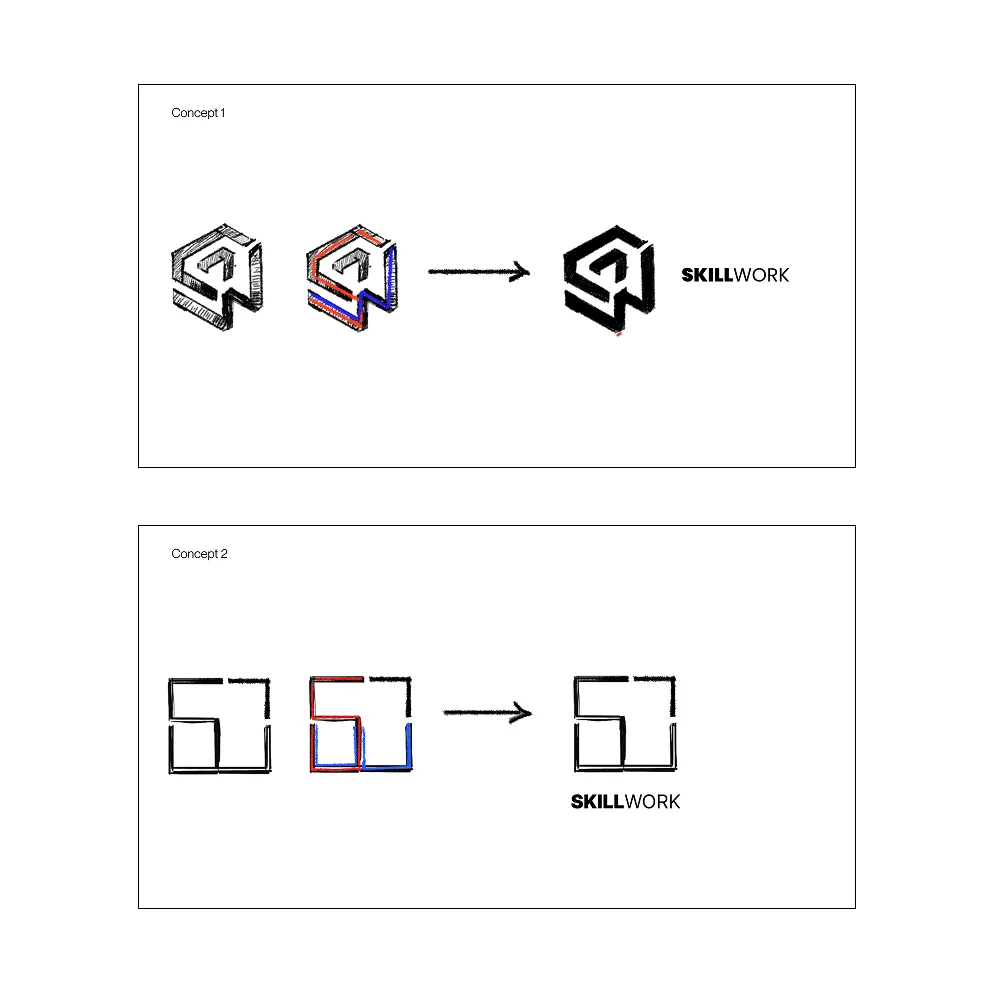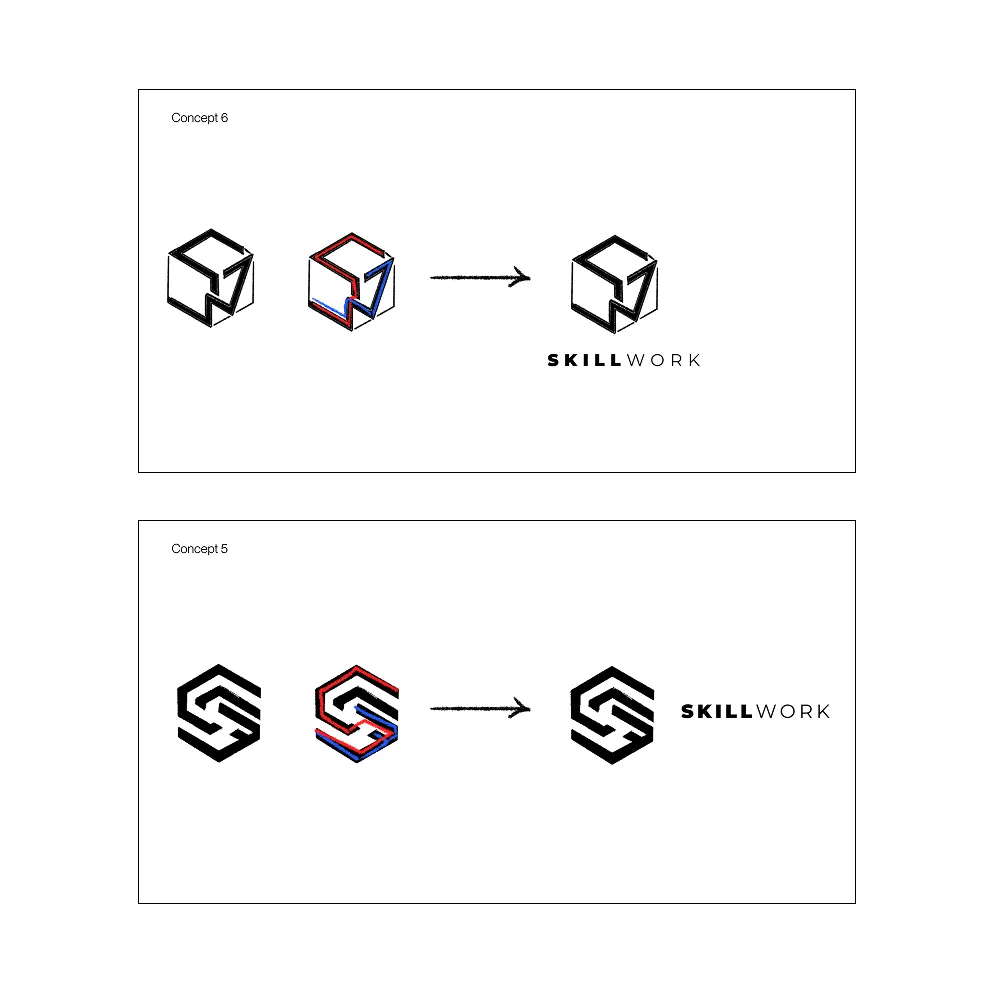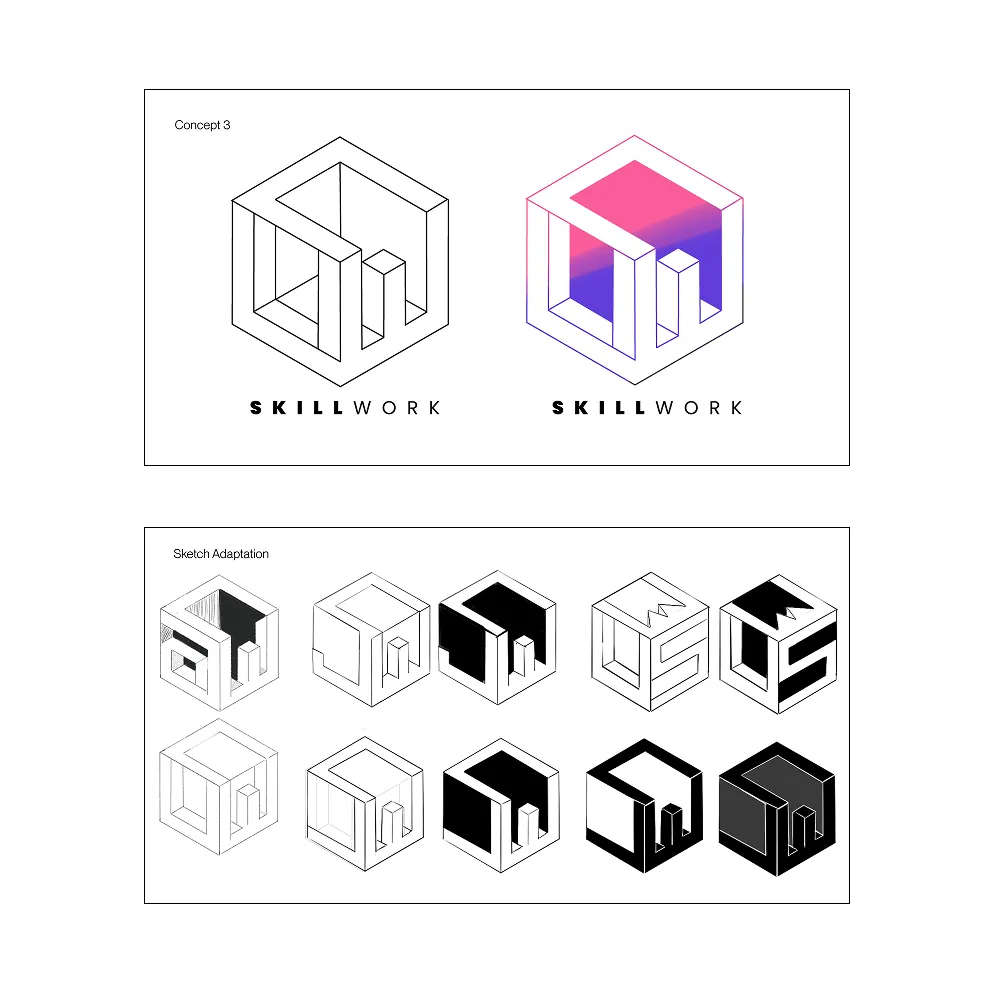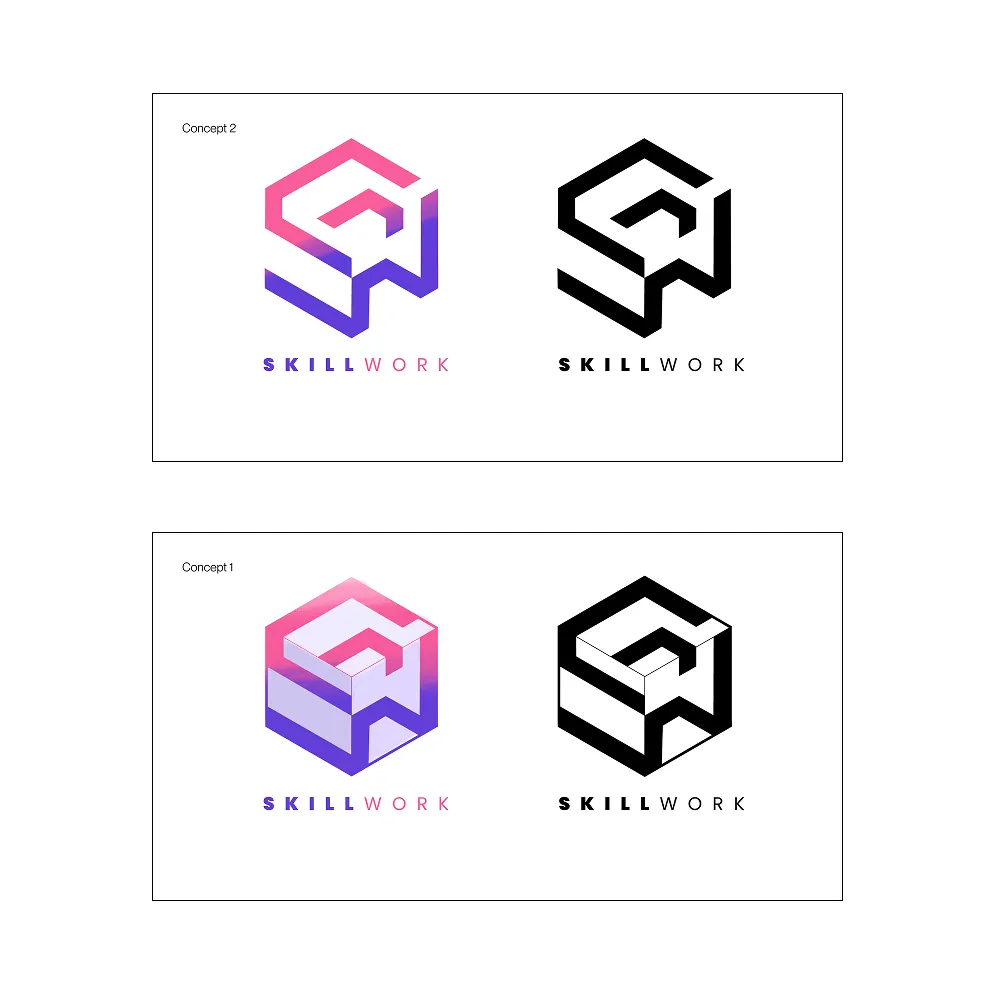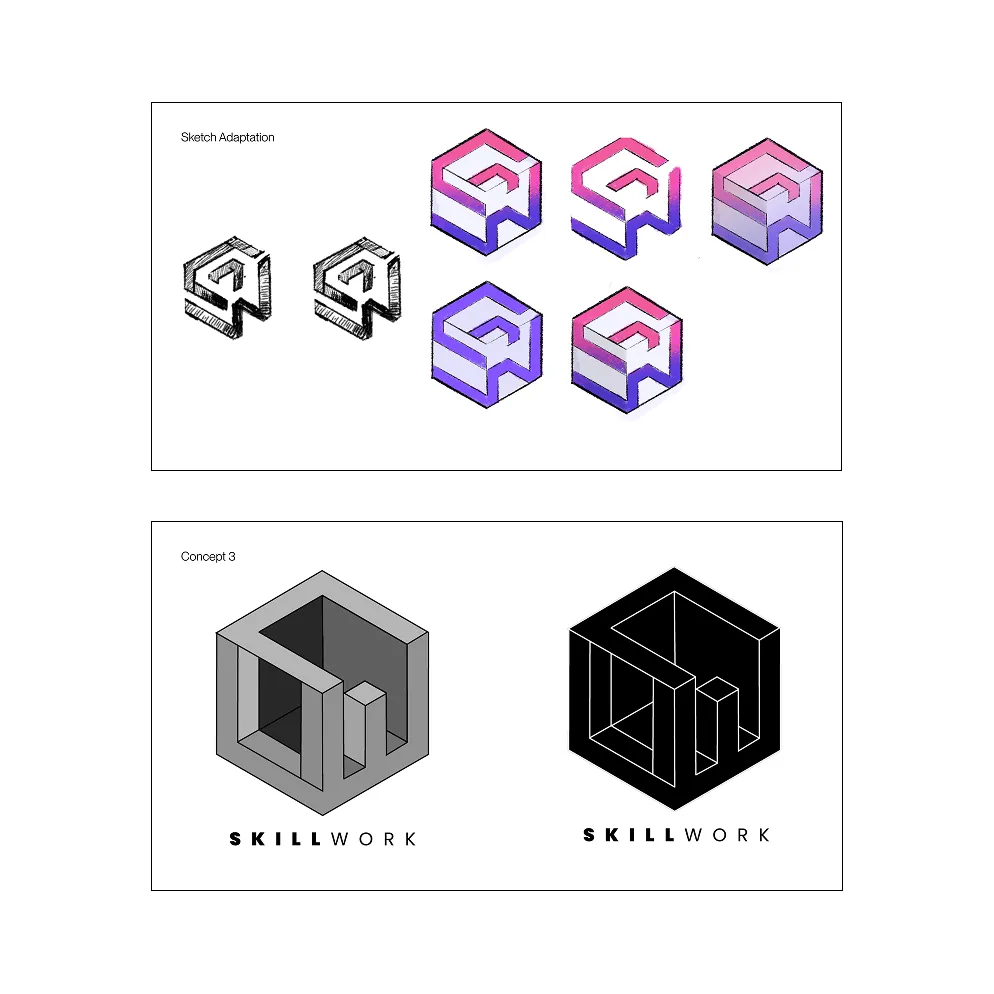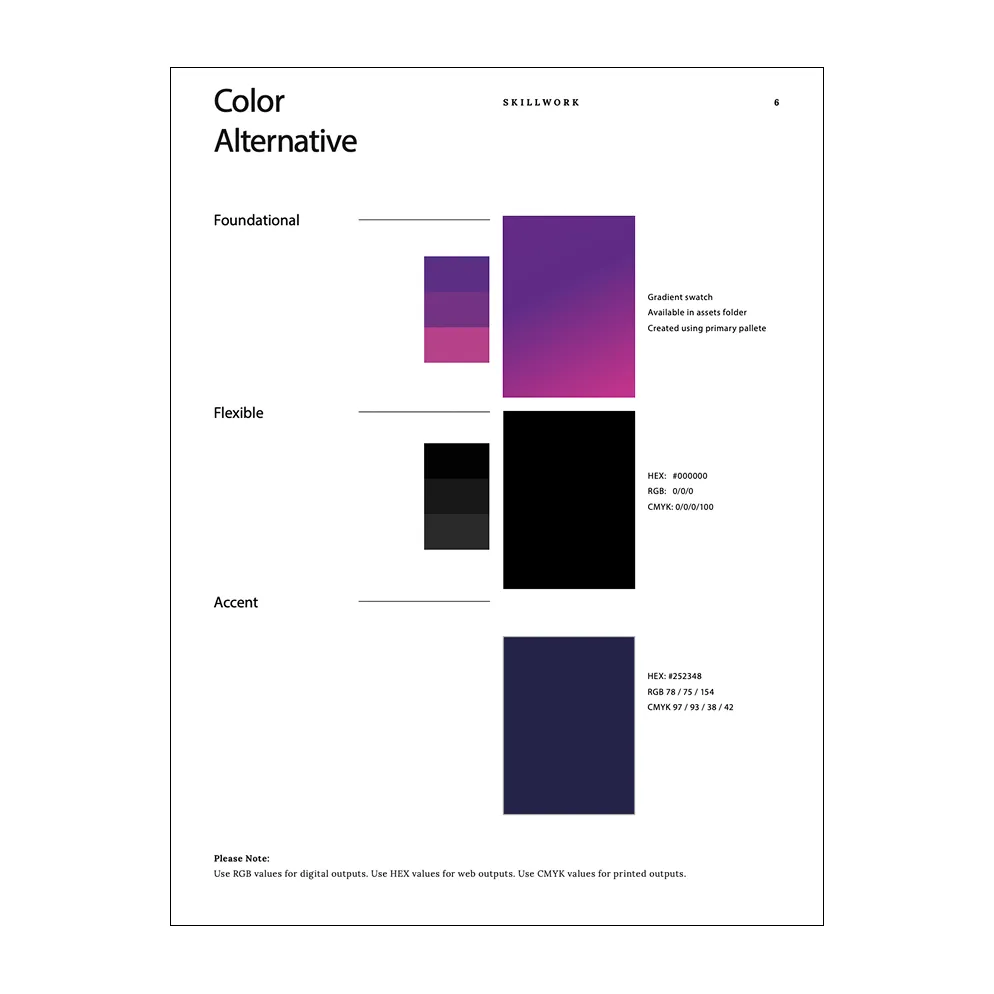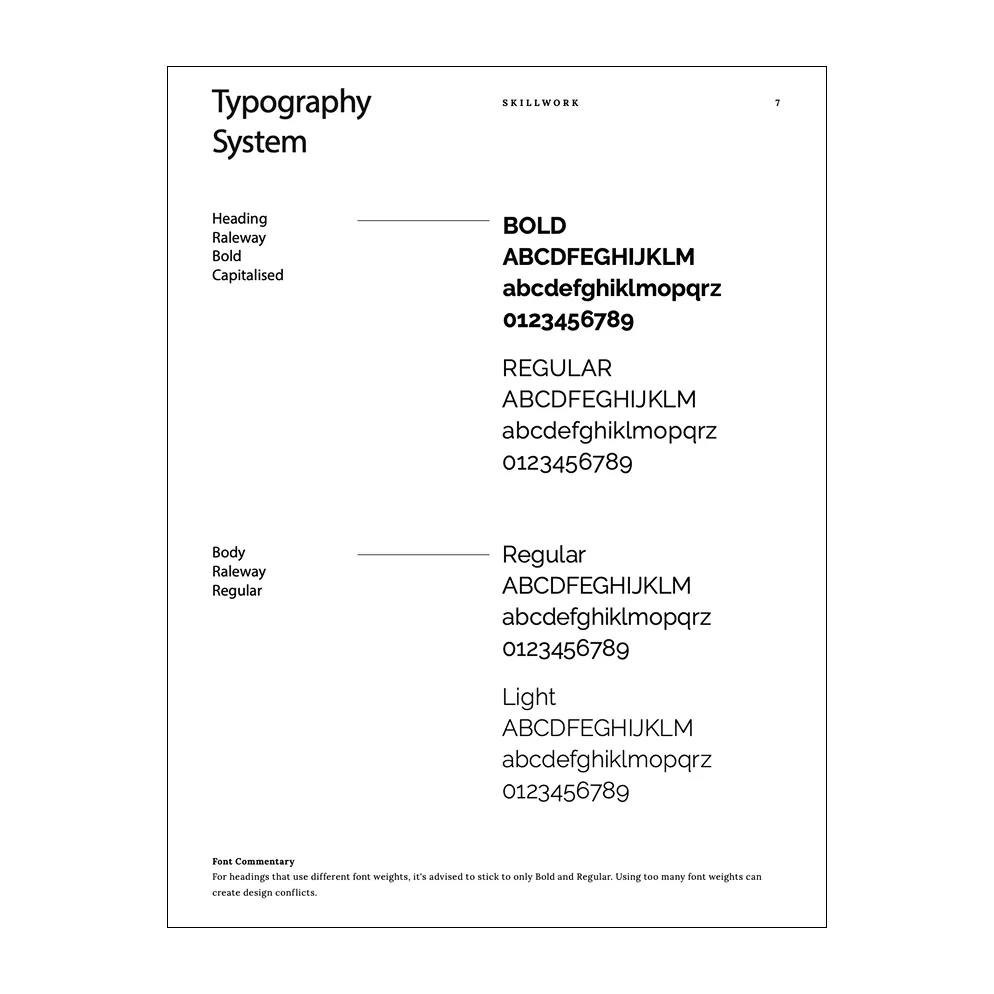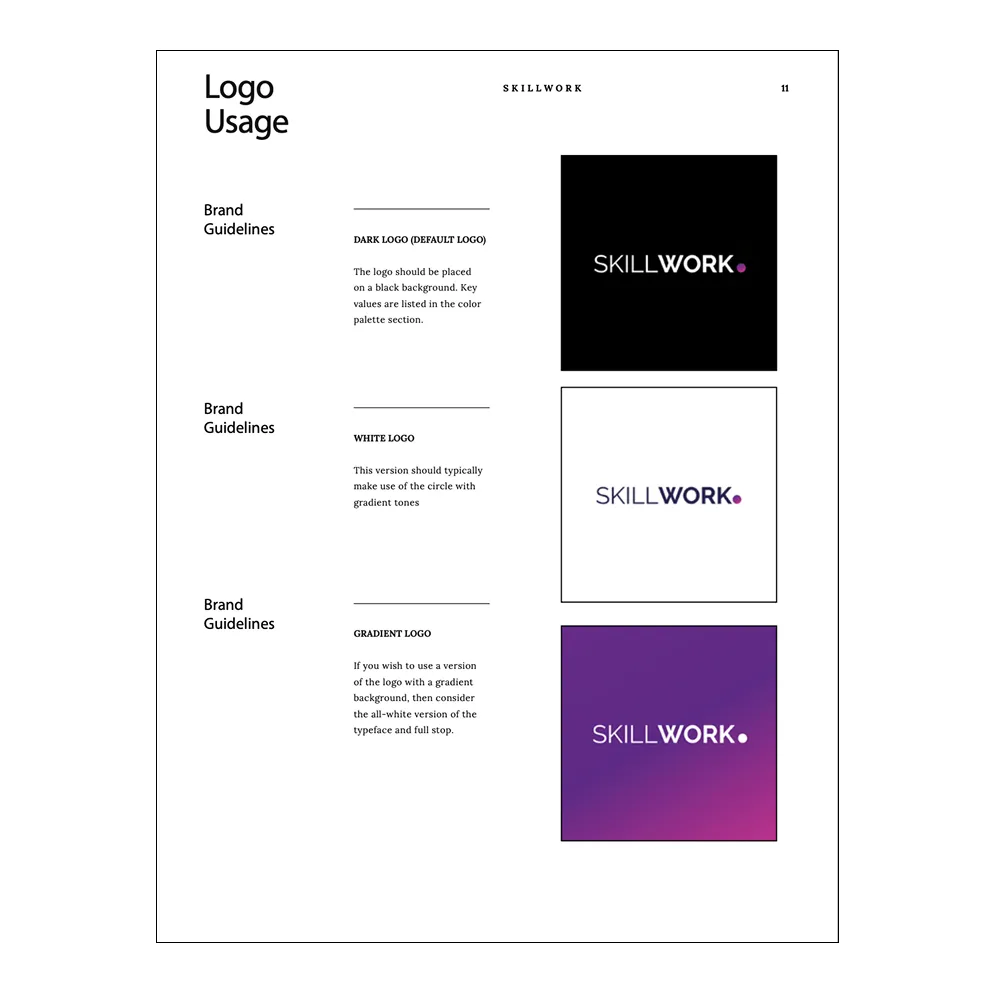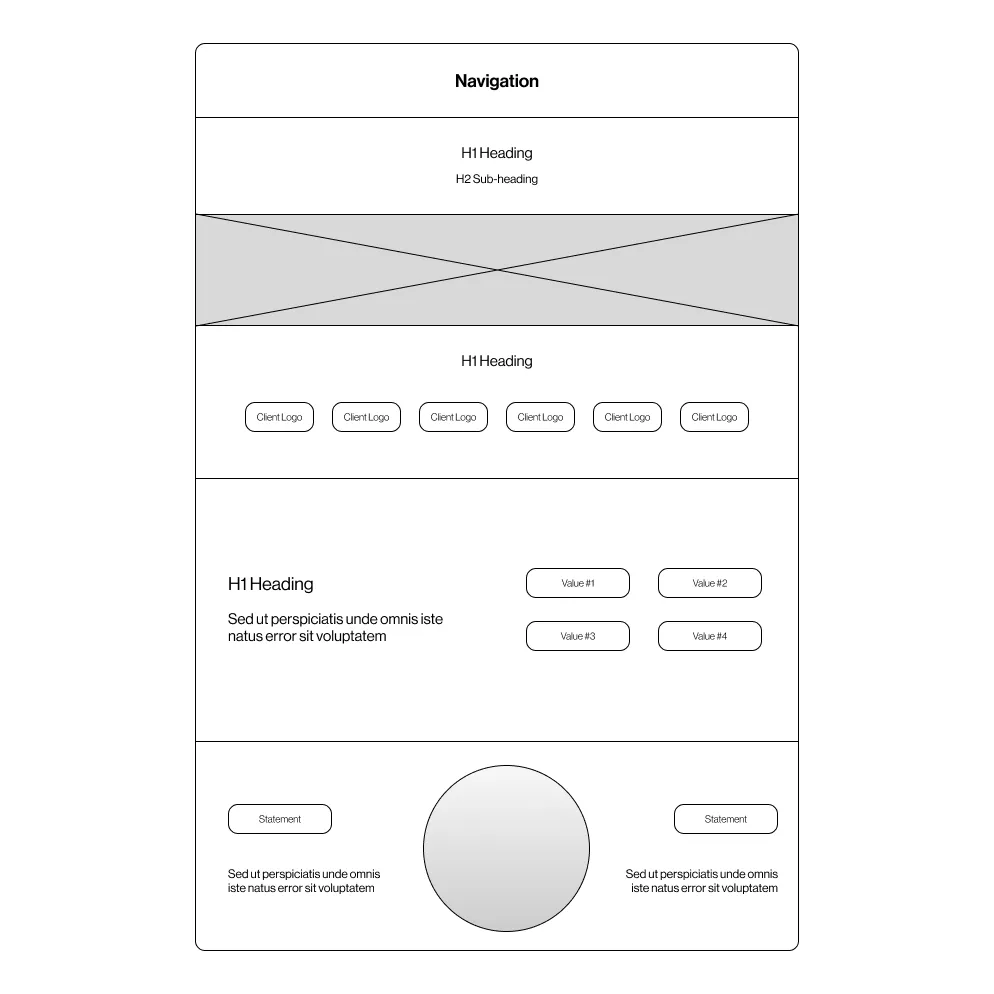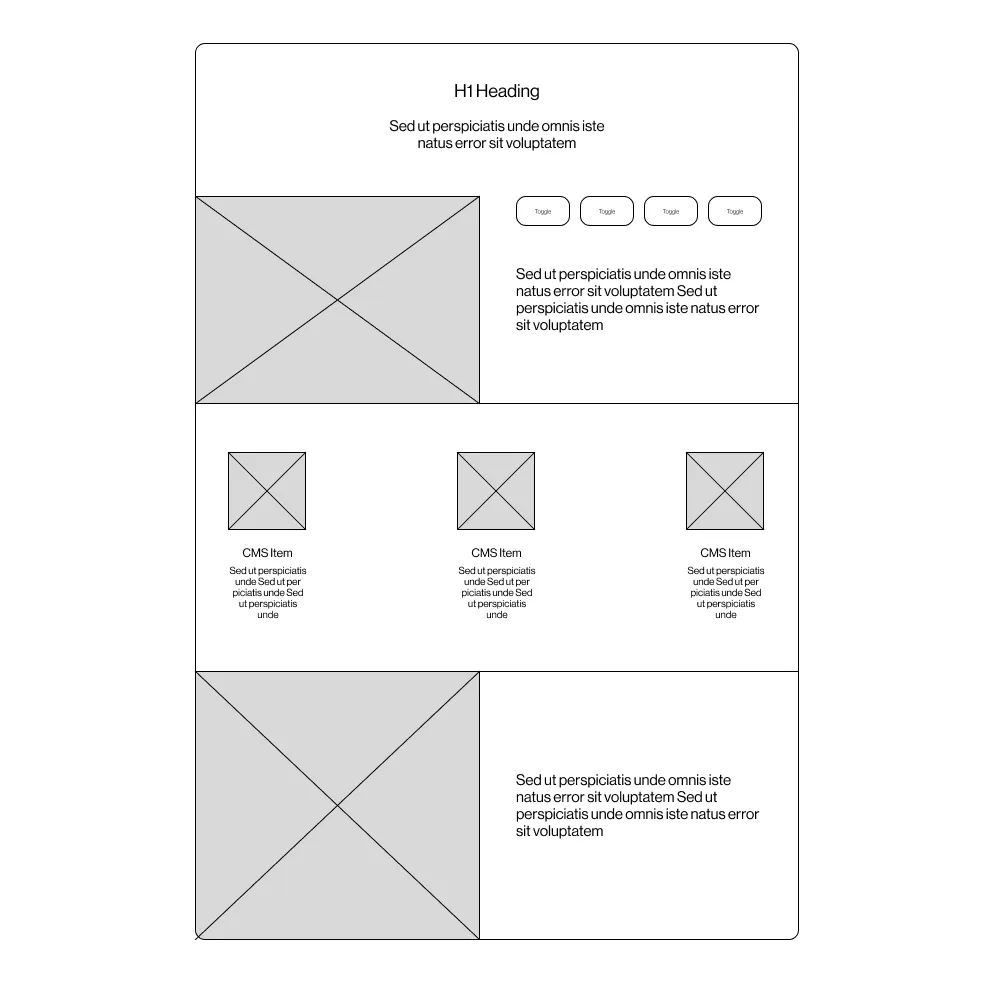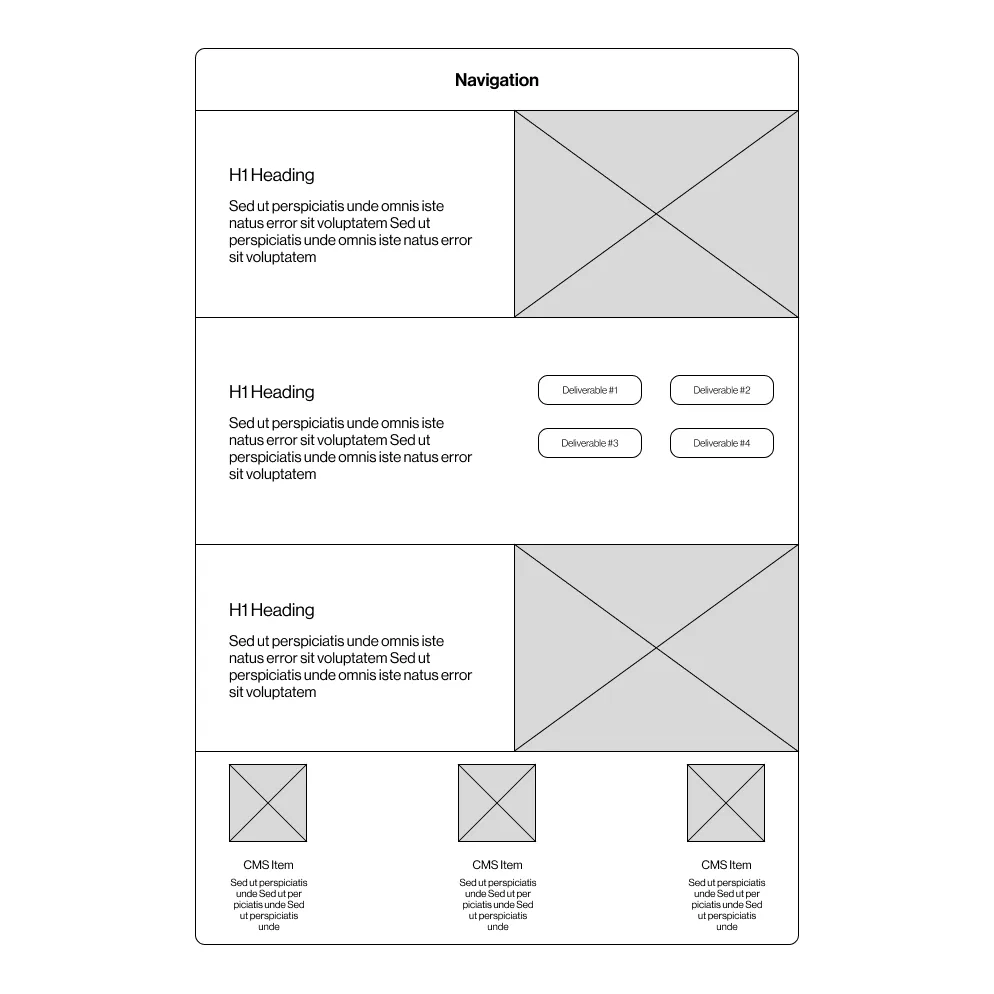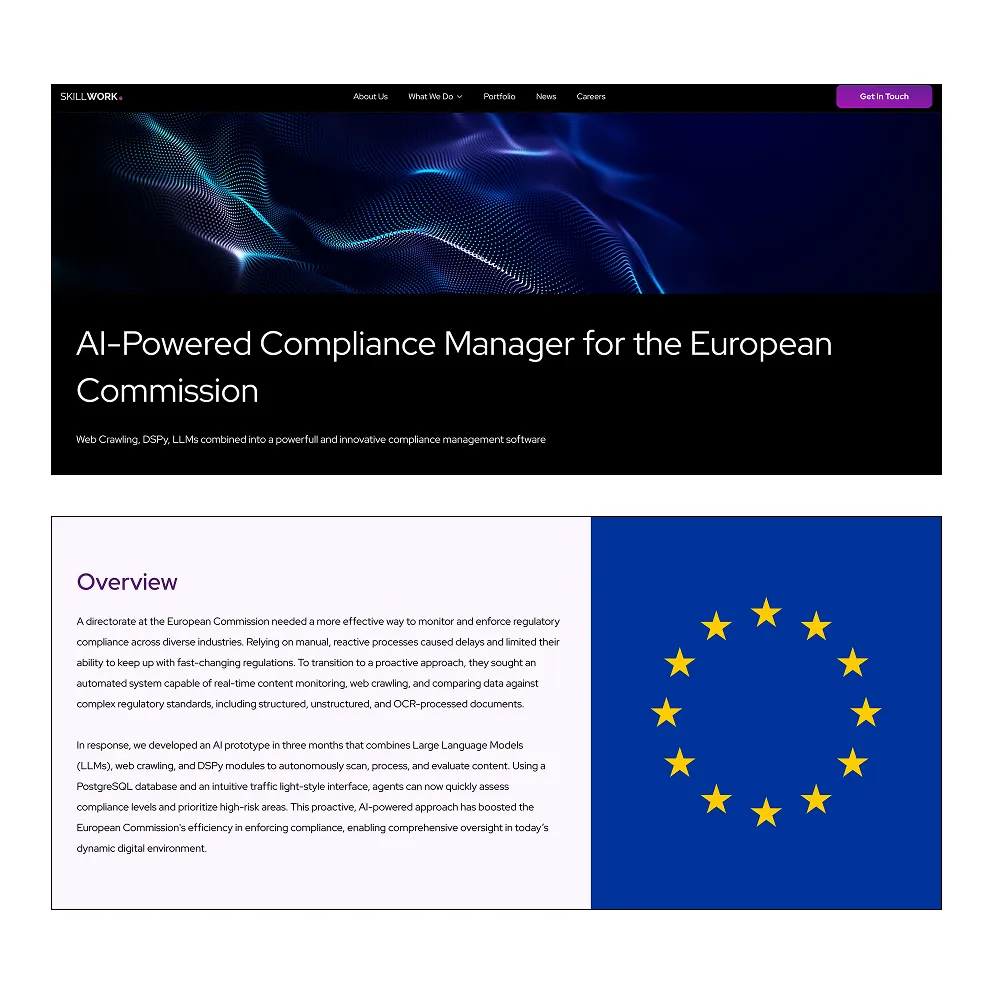
We were approached by a fresh, innovative technology company specialising in software development to assist them in mapping out their brand identity and design. We committed to helping Skillwork by ensuring their business strategy and core offerings aligned with their target audiences across the financial and healthcare sectors. Our engagement spanned 4 months, during which our team conducted stakeholder interviews and brand design workshops to align the company's brand values and ethos, and created a UI/UX plan to effectively communicate the brand to future customers.

As the company sought to translate its culture, founders, and values into a clear, compelling online presence, we found it crucial to define how each of Skillwork's services could be communicated to the right audiences. By understanding the company's culture, its founders' vision, and the value it delivers across the financial and healthcare sectors, we were able to assist with specific strategy and design decisions that ensured every opportunity was capitalised on, from brand identity through to the website itself.
Through our initial consultations, we understood that creativity - in the writing, and in the way the brand's values were echoed throughout the site would play a pivotal role in setting Skillwork apart from the competition.
We recognised that different stakeholders within a buying organisation would interact with the brand in different ways, each contributing to the decision-making process. It was also important to position Skillwork against established, successful consultancies such as Accenture. Brand values remained critical to the company's communication and the design choices made to target the right customers. We designed a range of assets that translated these choices into tangible outcomes.
Each service within Skillwork catered to a different audience, and the brand had to work within the expectations set by the financial and healthcare sectors. It was also important that brand values shaped the visual identity and communications, from colour palette to tone of voice. We ran interviews and design drafts to test these choices against stakeholder feedback. Arriving at a unified decision across the three founders resulted in a brand and comms approach that felt authentically Skillwork.
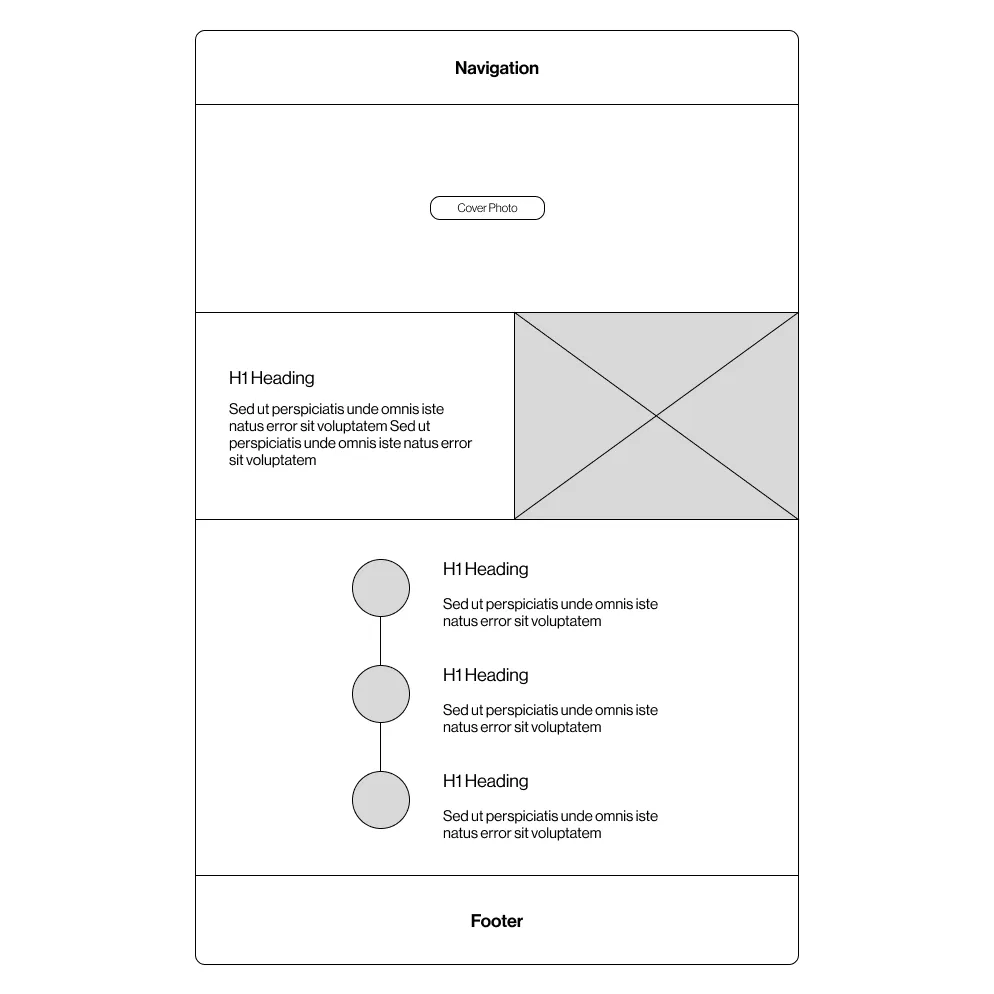
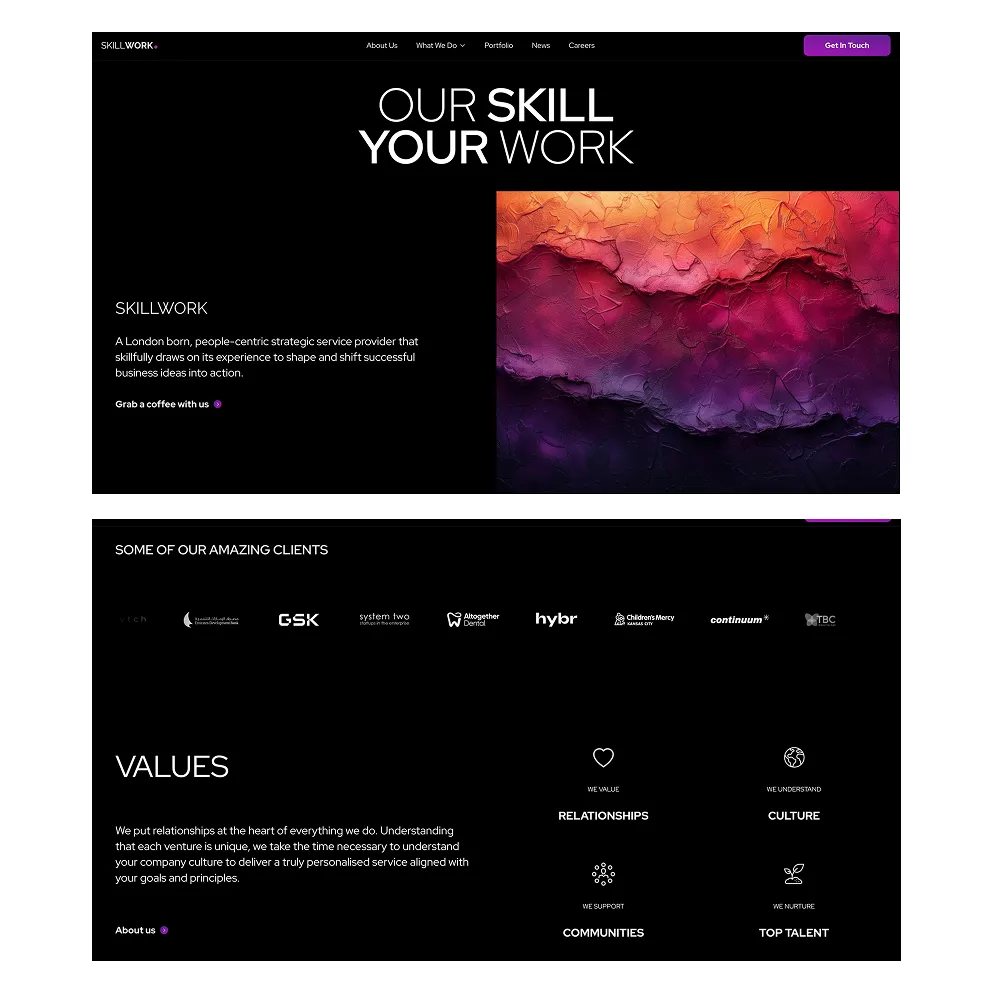
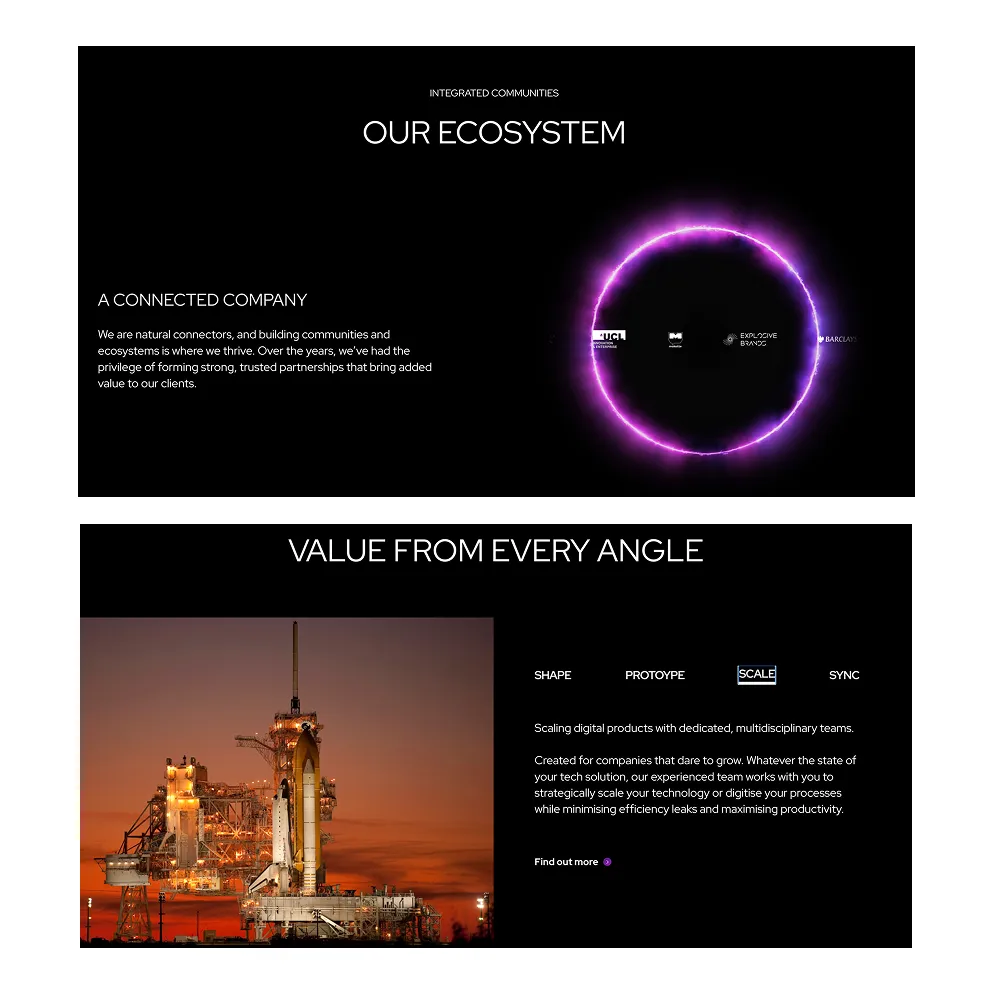
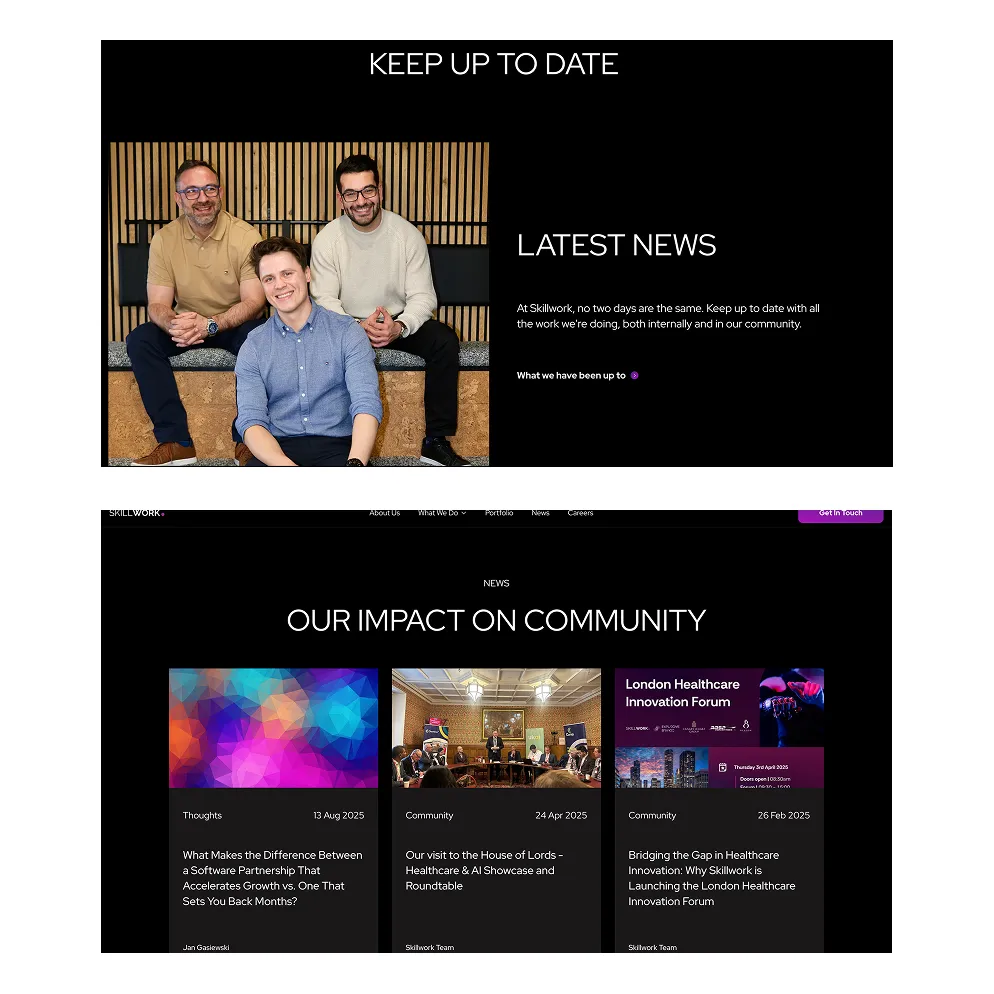
Translating the brand guidelines for the web meant bringing every element together in a single, cohesive system. We built Figma prototypes that brought the design to life, curating the photography and diagrams that helped communicate Skillwork's expertise. Alongside this, we worked directly with the developers, providing guidance on how the brand should be translated into code. This close collaboration ensured the final product remained true to the brand at every stage.
Since Skillwork's customer base was still developing, we had to build informed assumptions around personas and empathy maps rather than relying on established data. This helped guide a variety of business challenges, particularly around how to communicate effectively within the financial and healthcare sectors. Conducting stakeholder interviews and assessments also helped facilitate internal conversations on collecting the right data to make informed decisions going forward. Understanding their customers helped us to:
- Helping to shape decision choices that impacted the look and feel of the brand.
- Value propositions for the product suite which we could filter into the segmented customers.
- Website user experience and design choices.
- Improvements to the product interface and experience.


Priya is Head of Digital Transformation for a mid-sized private healthcare group with clinics across the South East.
Priya wants to digitise patient touchpoints, booking, records, follow-up care - without adding risk to clinical governance. She's under pressure from the board to show measurable improvements in patient satisfaction within the next financial year.
Regulatory compliance (CQC, GDPR, NHS DSPT) shapes every decision Priya makes. She's also heavily influenced by peer recommendations from other digital health leads and case studies that prove a vendor has handled clinical data before.
Previous software partners have treated healthcare like any other industry, missing the compliance and safeguarding requirements until late in the project. This has caused costly rework and eroded trust with clinical stakeholders.
Priya is methodical and risk-averse by necessity, but genuinely excited by what good digital care could look like. She asks detailed questions early and expects partners who can keep pace with her scrutiny rather than be defensive about it.
Priya is confident with digital tools and dashboards but isn't a developer. She uses a work-issued MacBook and iPhone, and relies on Teams and Notion to keep clinical and technical teams aligned.
Priya prefers clean, calming interfaces that reduce cognitive load for patients — muted colours, generous whitespace, and accessibility built in from the start rather than retrofitted.
Tom is the co-founder and CEO of an early-stage fintech startup building a savings app for gig economy workers.
Tom needs a working MVP in front of investors within three months to close his seed round. Speed and a credible, fundable product matter more to him right now than a fully-scaled build.
Investor expectations and FCA regulatory sandbox requirements drive most of Tom's decisions. He's also swayed by what other funded fintech founders in his network are building with and recommending.
Generalist agencies have quoted him enterprise-level timelines and prices for what should be a lean MVP, and few have understood the regulatory constraints fintech products carry from day one.
Tom is impatient in a productive way - he moves fast, makes decisions quickly, and expects the people he works with to match that energy. He gets frustrated by process for process's sake.
Tom is highly technical himself, having built the first prototype solo, but no longer has the bandwidth to code full-time. He works from a MacBook Pro, lives in Slack and Linear, and expects any partner to plug into his existing stack.
Tom wants a modern, fintech-native look — bold typography, dark mode as standard, and UI patterns that feel closer to Monzo or Revolut than a traditional bank.

Karen is COO of a mid-sized wealth management firm managing portfolios for high-net-worth clients.
Karen's main objective is to consolidate a patchwork of legacy systems into something coherent, reducing the operational risk and manual reconciliation that eats into her team's time every quarter.
Compliance sign-off from her Head of Risk is non-negotiable for any new software, and she won't move forward without clear evidence a vendor understands FCA requirements and data segregation for client funds.
Every new tool her team has adopted over the years solves one problem while creating three integration headaches. She's tired of vendors who promise seamless integration and deliver another silo.
Karen is pragmatic and deliberate. She's not opposed to change, but she's been burned before, so she moves cautiously, wants everything in writing, and values partners who under-promise and over-deliver.
Karen is comfortable with enterprise software but not a technologist. She works primarily from a Windows laptop, relies heavily on Excel and Outlook, and delegates deeper technical evaluation to her Head of IT.
Karen favours restrained, professional design — navy and grey palettes, clear data visualisation, and nothing that feels like it's chasing trends over trust.

Thinks
"If this vendor doesn't understand clinical governance now, they never will once we're mid-project."
"I want a partner who challenges my assumptions, not one who just says yes.
""The board wants numbers - I need to be able to show this in patient outcomes, not just uptime."
Does
Relies on referrals for current recruitment.
Researches options on locum-centric platforms from where he can hire.
Looks at websites of companies that meet his specific need.
The website that presents the right value proposition leads him to book a demo.
Says
"We can't move forward on anything until Information Governance has signed off."
"I need to see evidence you've built something like this for a regulated care setting before."
"Patient trust is the whole product, if that breaks, nothing else matters."
Feels
Priya feels the weight of being the person who has to say yes or no to change in an organisation that's naturally cautious about risk.
She's optimistic about what digital transformation could do for patient care, but that optimism is tempered by the knowledge that one poorly handled data incident could set the whole programme back years. This tension between ambition and caution defines most of her working week.

Thinks
"I'd rather pay more for someone who's done fintech before than save money on someone learning as they go."
"Every week of delay is a week closer to running out of runway."
"I need a partner, not just a vendor who disappears after the contract's signed."
Does
Tom scopes the tightest possible MVP himself before approaching any development partner, so conversations start from a clear brief rather than a blank page.
He asks potential partners directly about their experience with FCA sandbox products and regulatory constraints before discussing timelines or cost.
He checks partners' portfolios for other funded startups they've worked with, treating that as a stronger signal than case studies alone.
Says
"I need something investors will actually believe in, not a five-year roadmap."
"I don't have time for a discovery phase that takes longer than the build."
"If it's not compliant from day one, it's not worth building."
Feels
Tom feels the constant pressure of a founder racing against his own runway - every week without a fundable product is a week closer to running out of money.
That urgency makes him decisive, but it also means he's quick to lose patience with anyone who slows him down without adding clear value.
Underneath the speed is a genuine fear of building the wrong thing and finding out too late.

Thinks
"I don't have the appetite for another vendor relationship that ends in finger-pointing over integration."
"I need to know exactly what happens to client data at every stage."
"If my Head of IT isn't confident in this, neither am I."
Does
Karen maps out every existing system and manual workaround her team relies on before engaging a vendor, so any proposal has to account for the real operational picture, not an idealised one.
She loops in her Head of Risk and Head of IT from the first vendor call rather than presenting them with a decision already made.
She asks for a phased rollout plan with clear stop points, so the firm isn't locked into a single big-bang migration.
Says
"I've been promised seamless integration before - show me it's actually possible."
"Nothing goes live without sign-off from Risk and Compliance."
"I'd rather this take an extra month than cause a problem with client funds."
Feels
Karen feels responsible for operational stability in a firm where mistakes carry real financial and reputational consequences for clients who've trusted the firm with their wealth.. Years of being sold "the fix" that turned into another silo have left her guarded, but she genuinely wants her team freed from manual reconciliation work that keeps them from higher-value tasks.
That mix of caution and genuine appetite for change shapes how carefully she evaluates every new proposal.


Working with Skillwork was a rewarding experience from the outset. The team's openness and appetite to sharpen how they present themselves made it easy to get to the heart of the brand quickly. We brought clarity and consistency to Skillwork's communication, unifying the brand design across every touch-point and aligning stakeholders around a shared direction. The result is a set of clear, consistent sales assets that give the team real confidence in corporate conversations, and we're proud to have played a part in shaping how Skillwork shows up to the world.