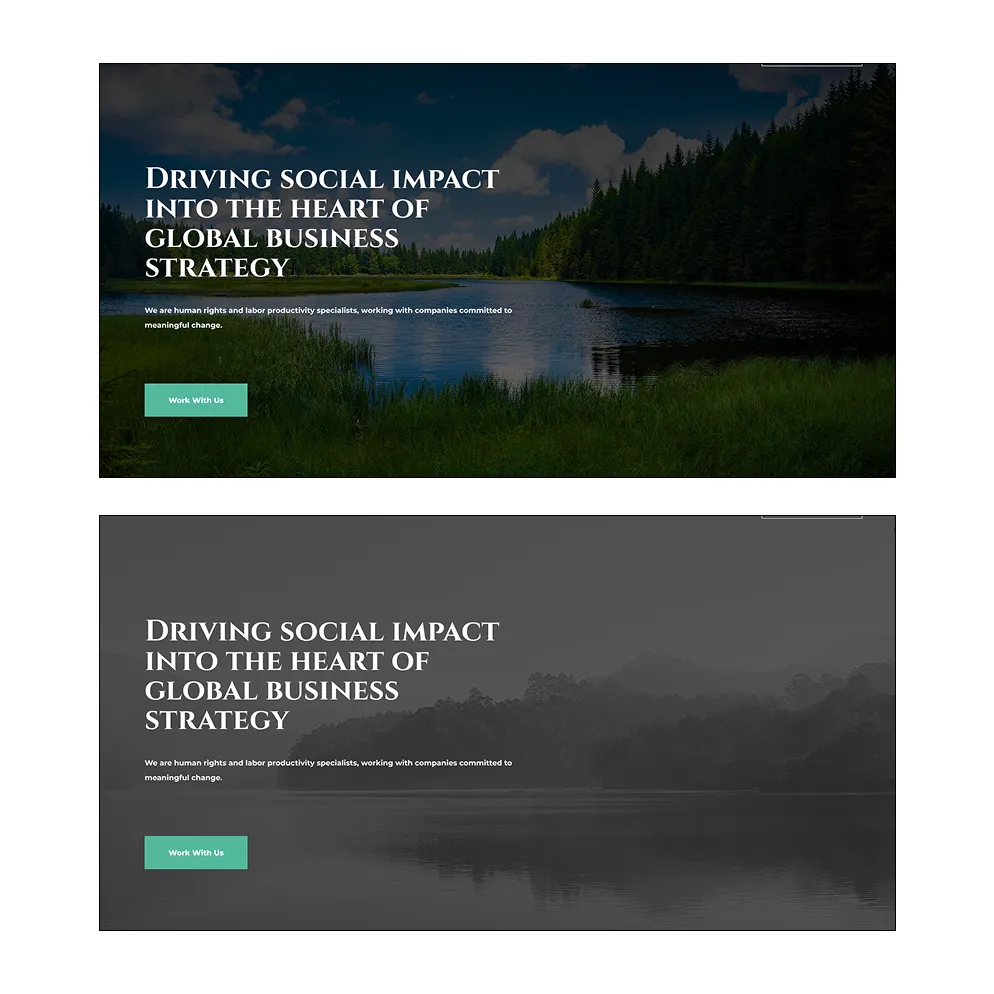
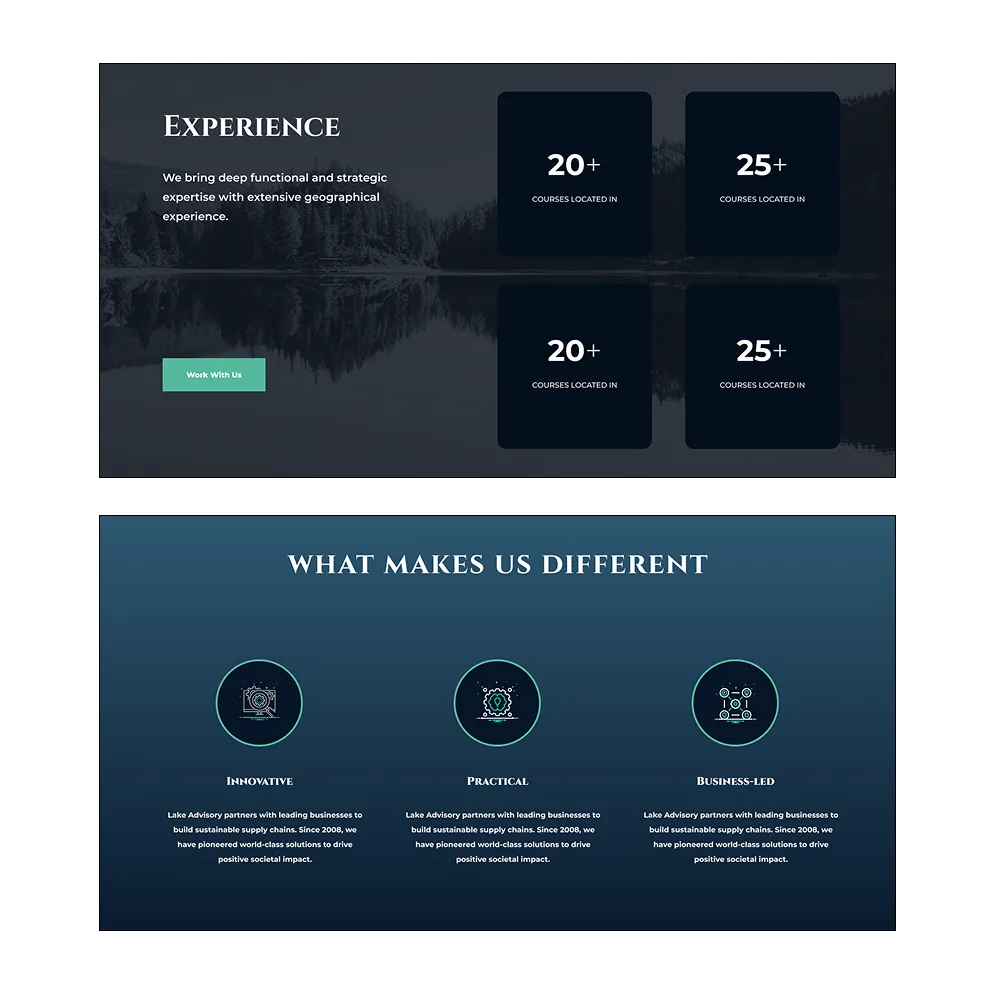
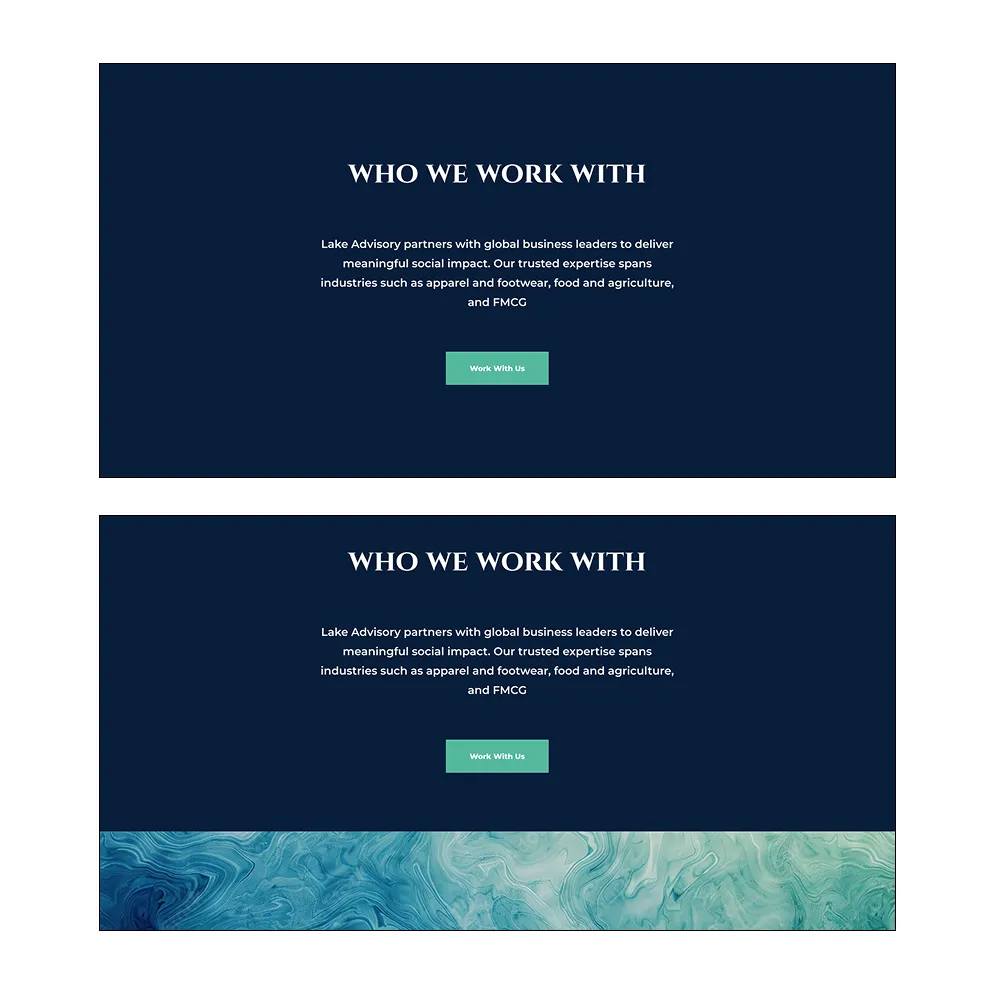
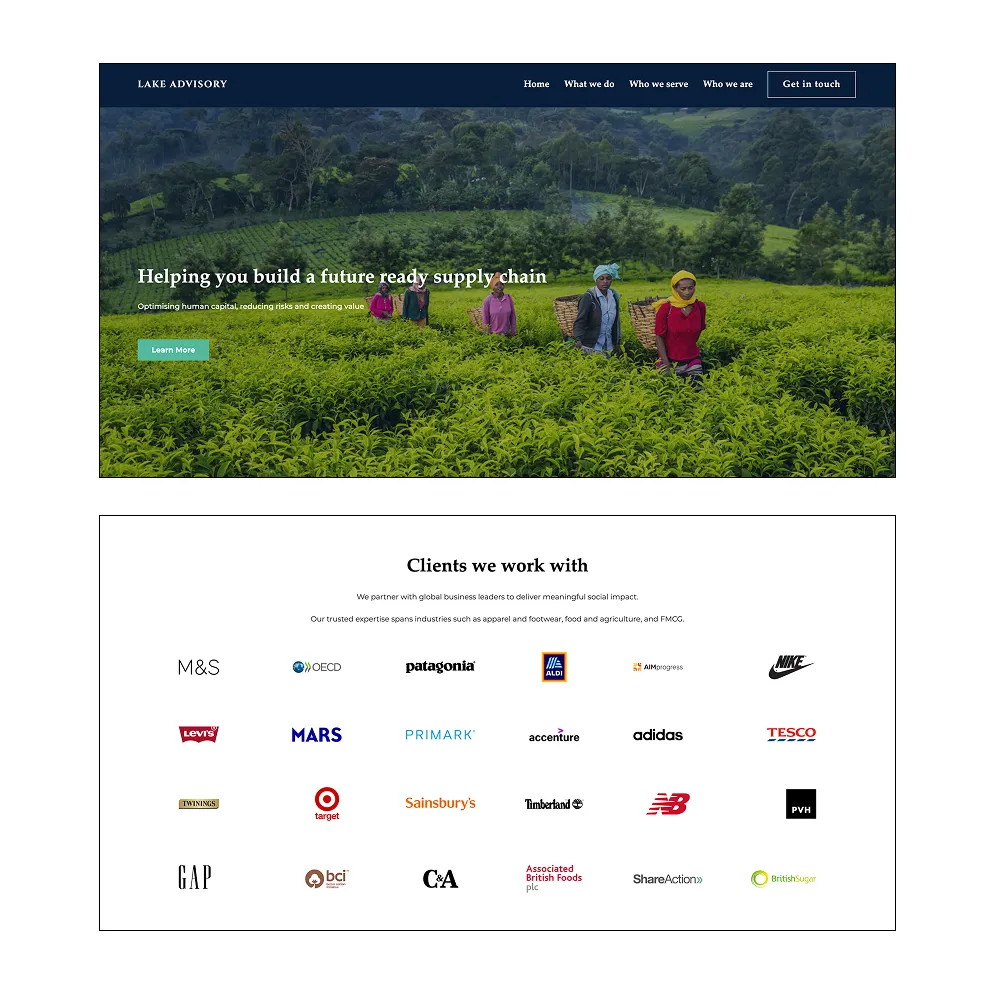
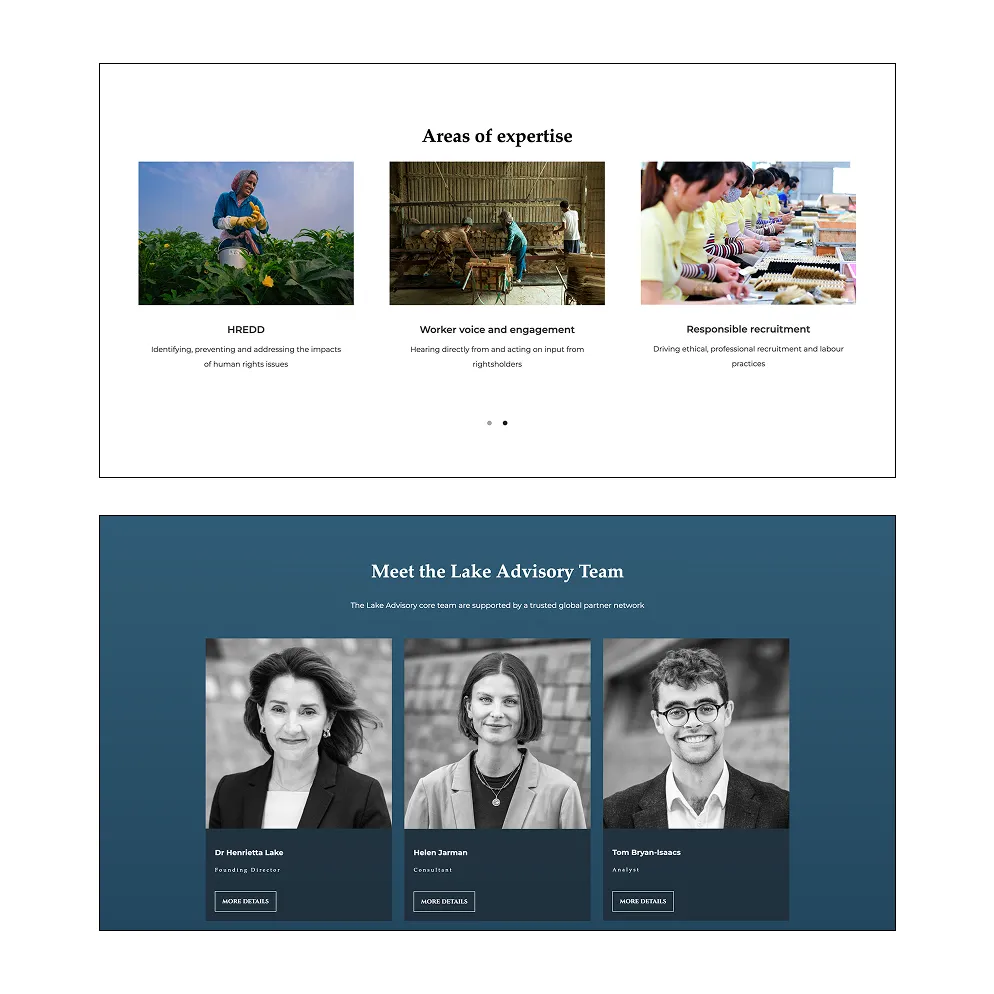
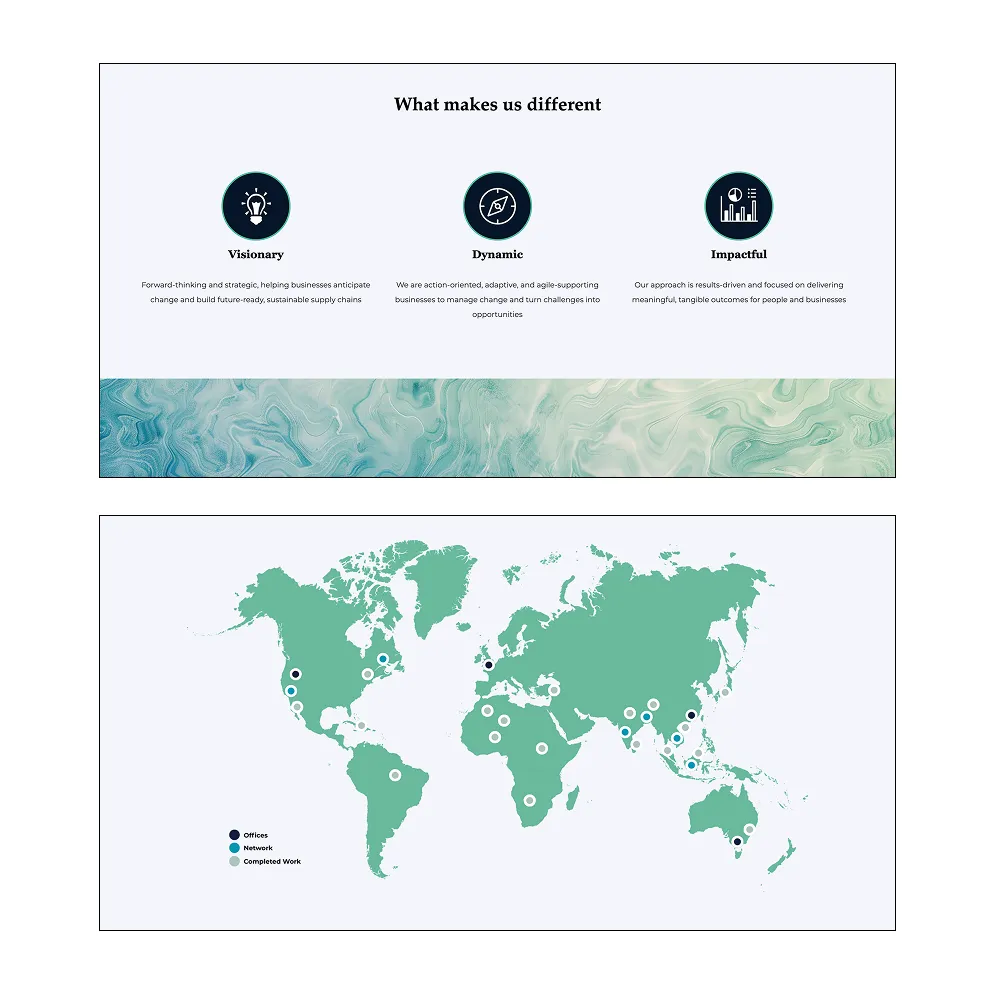
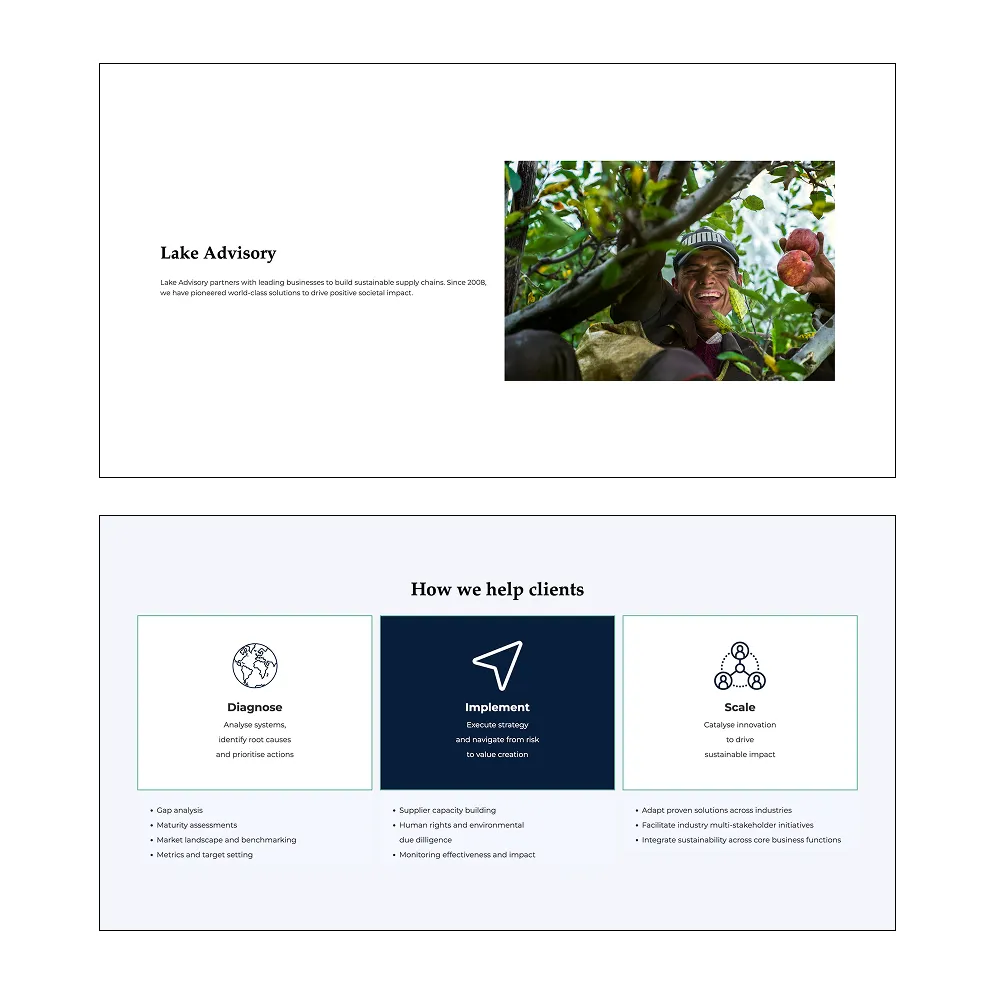
We were approached by Lake Advisory, a consultancy that partners with global business leaders to deliver meaningful social impact, with trusted expertise across industries such as apparel and footwear, food and agriculture, and FMCG. We were tasked with a full website redesign to help them communicate their brand and offering more clearly to corporate clients. Our engagement spanned 12 weeks, during which our team worked to rethink the site's structure, messaging and visual design so that Lake Advisory's value would land immediately with the senior decision-makers they serve.
%202%20(2).webp)
As Lake Advisory had grown, their offering had evolved and the team had restructured, leaving the previous site outdated and out of step with the business. We found it crucial to realign the website with where the company is today, establishing clear positioning and presenting their services in a way that speaks directly to corporate clients. With the business still growing, we also built in dynamic features so the site could flex and scale alongside them. A key challenge was the lack of existing design assets, which meant developing a stronger visual foundation to carry the brand consistently across the site.
Through our initial consultations, we understood that alignment would play a pivotal role in the project's success. Working with multiple stakeholders across the team, we coordinated input and feedback throughout, ensuring every decision on positioning, messaging and design reflected a shared view of the brand.
To position Lake Advisory effectively with corporate clients, it was important to understand how the team spoke about their work, the value they delivered, and the impact they wanted to be known for. Bringing these perspectives together was the first step in shaping the site's communication. By aligning the messaging with what the team was already saying in their client conversations, we created a consistent narrative that clearly articulates their expertise across apparel and footwear, food and agriculture, and FMCG.
Lake Advisory had an established identity but lacked a comprehensive design kit to support it across a full website. Rather than reinventing the brand, we focused on leveraging and evolving what already existed. We extended their visual language into a broader set of assets and components, giving the brand the depth it needed to communicate professionally and consistently online, while staying true to the identity the team had built.
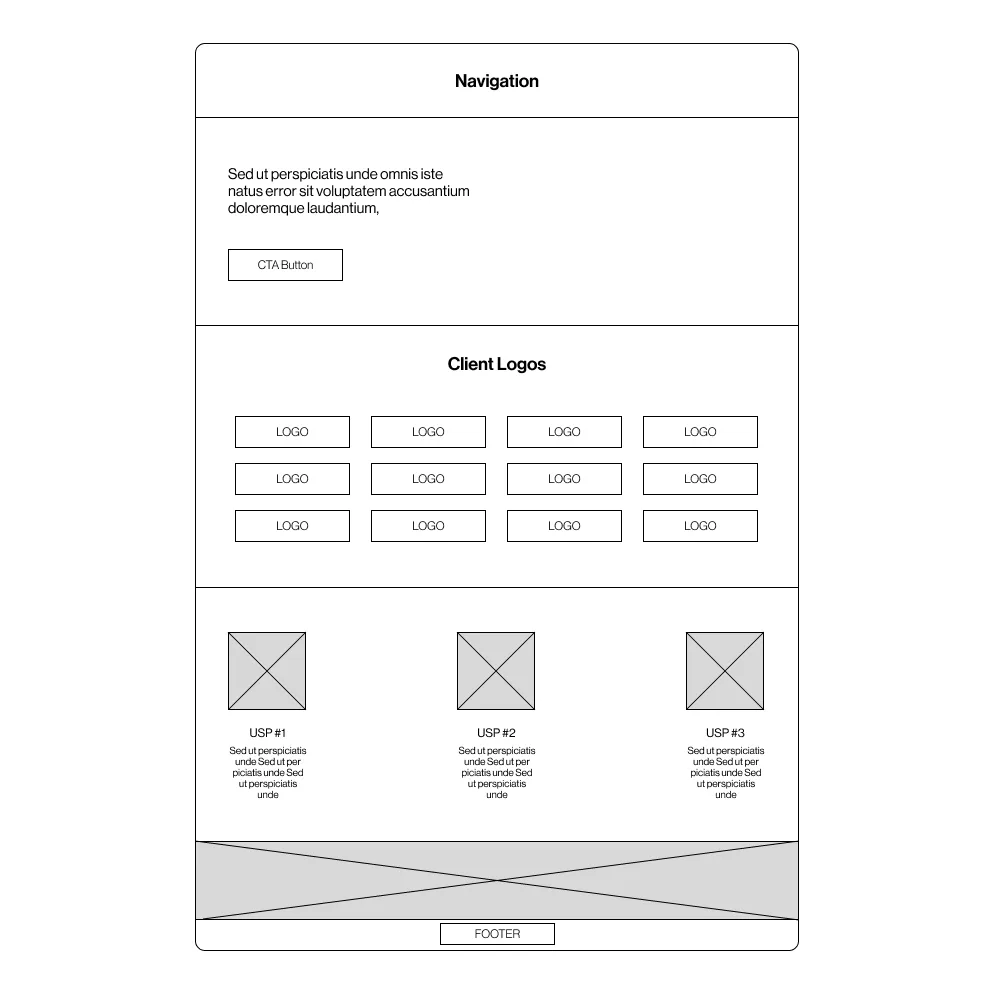
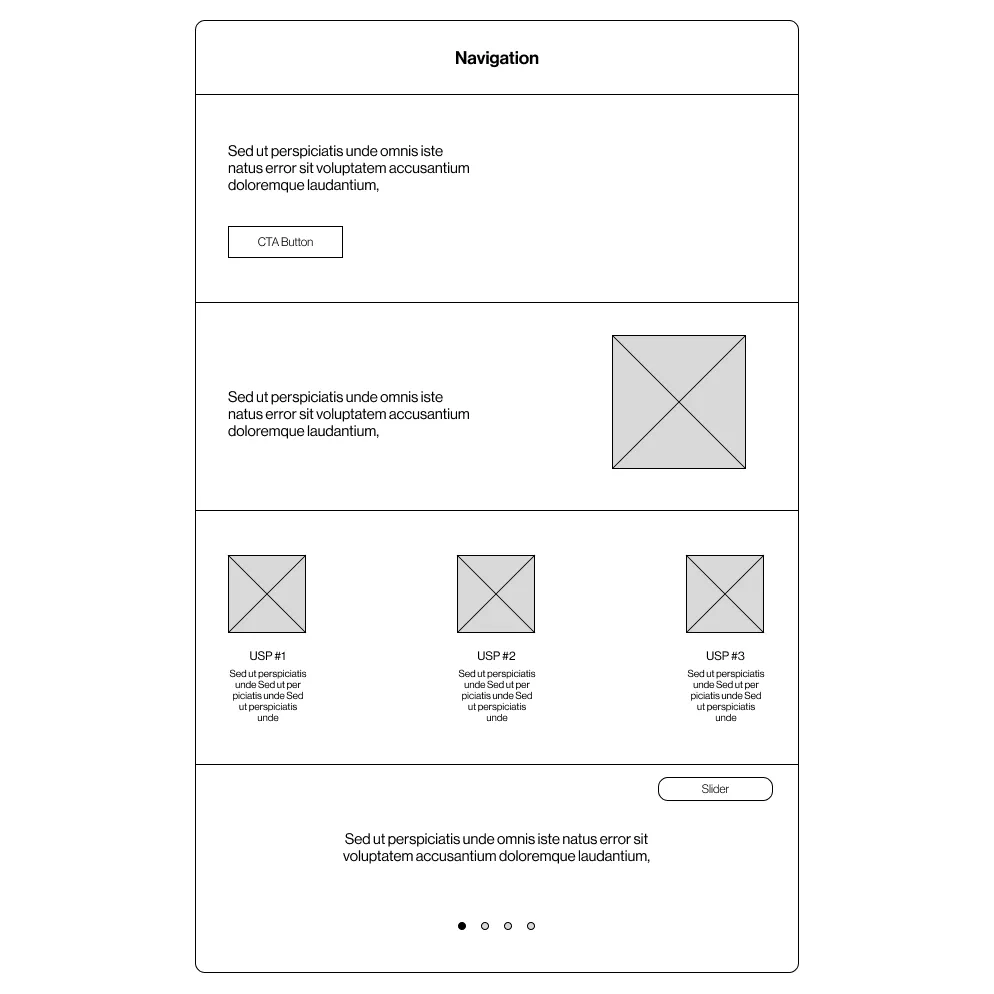
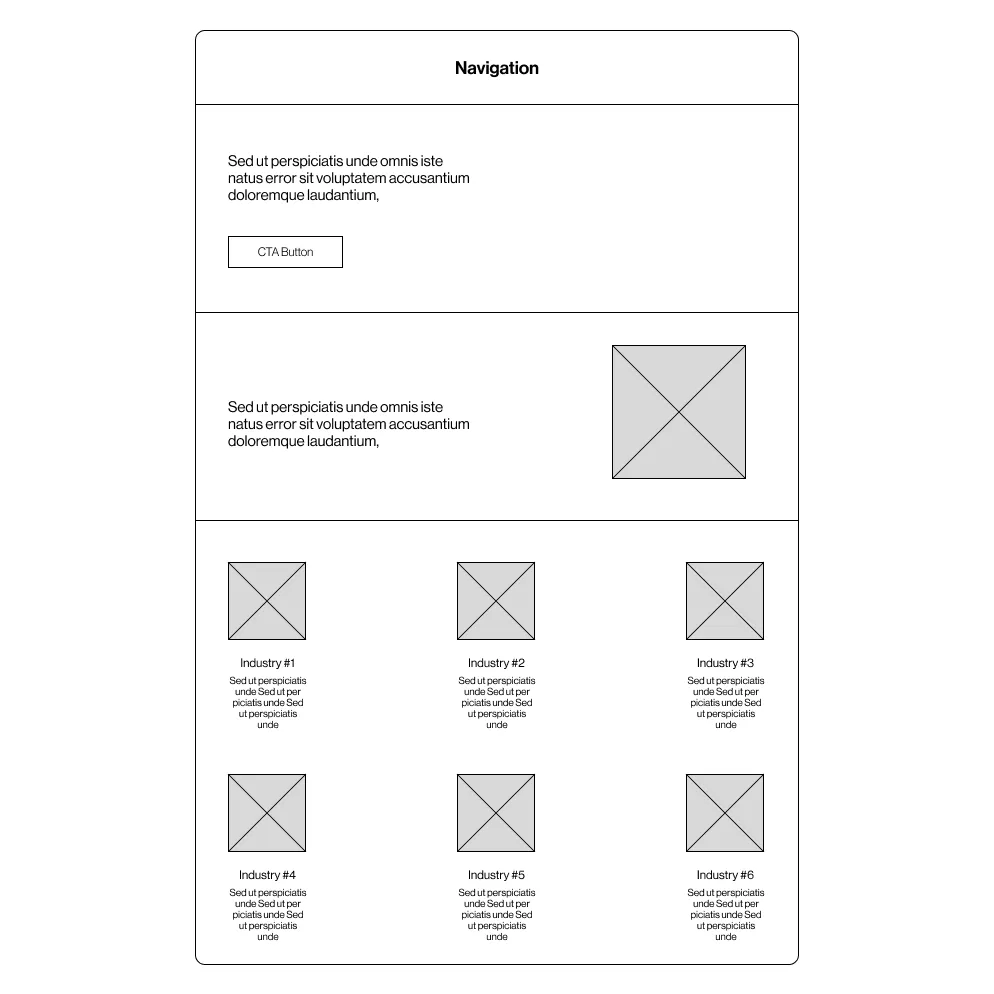
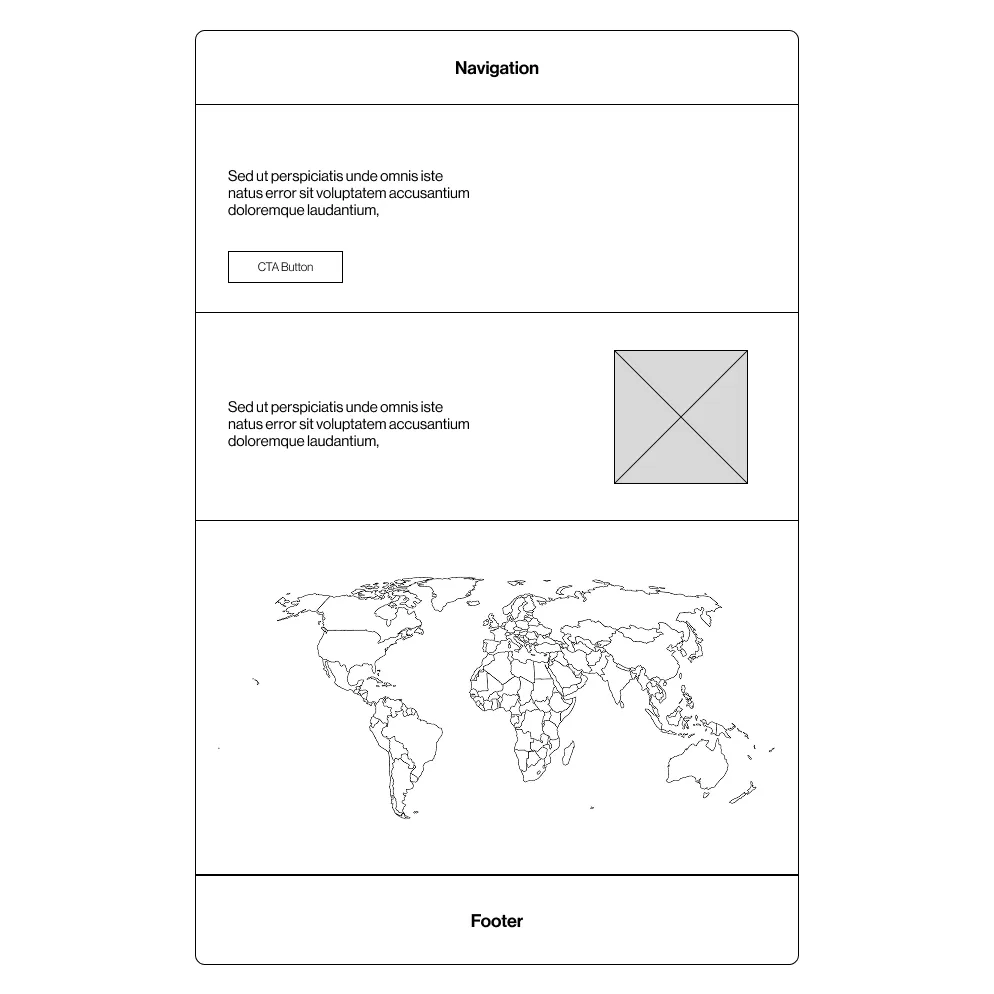
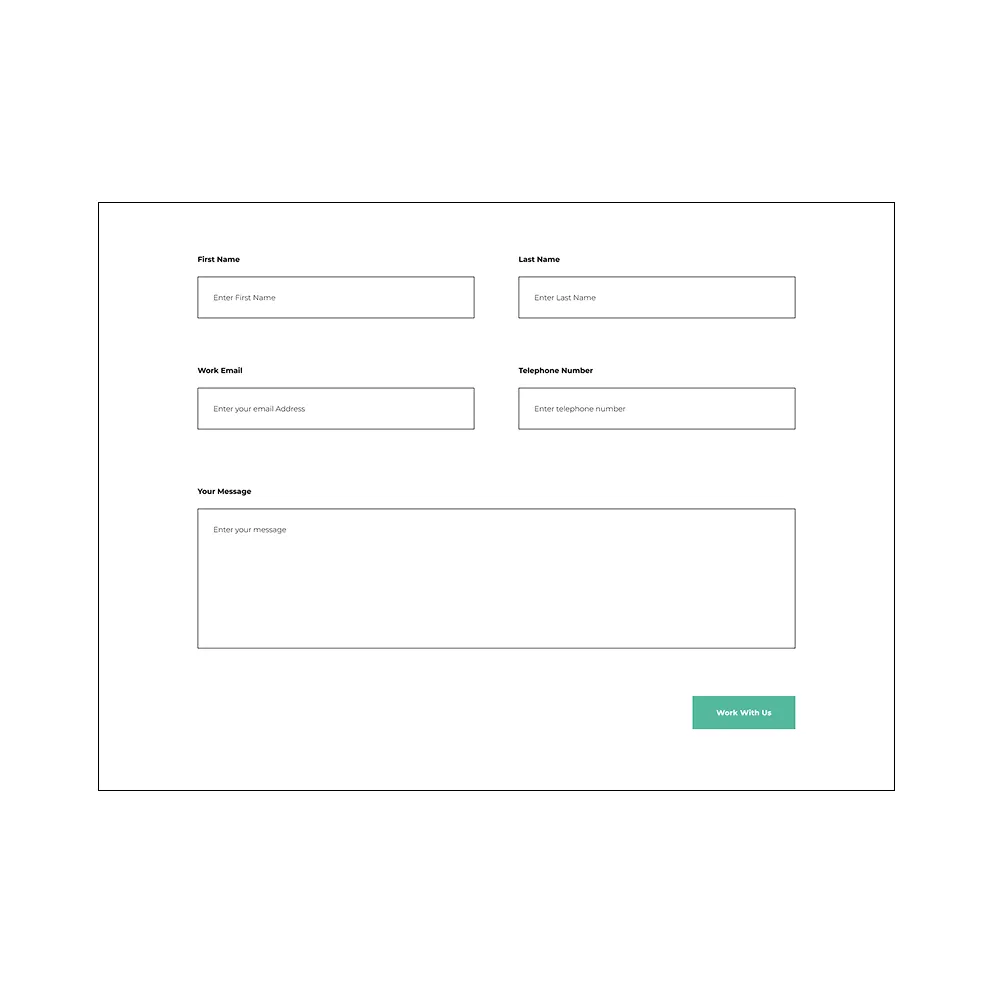
With the messaging and visual foundations in place, we designed the new website in Figma, working closely with the team to refine each page through feedback and iteration. Once the designs were signed off, we developed the site in Webflow, building in dynamic features that allow the team to update content and grow the site as the business evolves. The result is a website that clearly communicates Lake Advisory's offering and gives them a platform that can scale alongside them.
With Lake Advisory already working alongside a strong portfolio of global brands, we were able to draw on the team's deep knowledge of their clients to build a clear picture of who the website needed to speak to. Through consultations with the team, we explored the needs, priorities and pressures facing corporate decision-makers responsible for sustainable, future-ready supply chains. Understanding their audience helped us to:
- Shape design choices that evolved the look and feel of the brand, reflecting a consultancy that is visionary, dynamic and impactful.
- Articulate their services clearly, connecting human capital, risk reduction and value creation to the outcomes corporate clients care about.
- Structure the website around what Lake Advisory does, who they serve and who they are, making it easy for visitors to find what is relevant to them.
- Inform the user experience and design decisions, so that credibility, from client partnerships to sector expertise, is communicated from the first visit.


Daniel is Head of Responsible Sourcing at a global sportswear and footwear brand with manufacturing across South and Southeast Asia.
Daniel's main objective is to move his company beyond audit-based compliance towards genuine improvements in worker wellbeing, while preparing for incoming human rights due diligence legislation across his tier 1 and tier 2 suppliers.
Daniel is shaped by pressure from legal, investors and NGOs in equal measure. He pays close attention to what peer brands are doing and gives weight to advisors who have credible on-the-ground experience in sourcing countries.
He's tired of social audits that tick boxes without changing conditions in factories. Too many reports land on his desk that satisfy compliance but don't tell him where the real risks are or what to do about them.
Daniel is purpose-driven but commercially grounded. He believes in the work, but knows he has to make the business case internally, so he values partners who can speak both languages.
Daniel works from a MacBook, uses supplier data platforms daily, and keeps up with the sector through LinkedIn, industry reports and webinars.
Daniel responds to clean, editorial design with real photography of people and places. He's wary of glossy sustainability imagery that feels like greenwashing and looks for evidence of impact.

Priya is Director of Sustainability at an international food and agriculture company sourcing from smallholder farmers across East Africa and South Asia.
Priya's main objective is to build resilient, ethical sourcing that improves livelihoods for farming communities, while meeting the increasingly demanding requirements of the major retailers her company supplies.
Retail customers' sourcing standards drive much of her agenda, alongside certification bodies and her board. She trusts recommendations from peers in multi-stakeholder initiatives she's part of.
Priya is frustrated by consultancies that bring generic frameworks without understanding the realities of smallholder supply chains. She's seen too many programmes designed in head offices that fall apart in the field.
Priya is analytical, collaborative and grounded by years of field experience. She asks probing questions and values partners who listen before they recommend.
Priya travels frequently and does much of her reading on her phone between meetings and flights. She relies on Teams, shared drives and data dashboards to stay connected to teams in sourcing regions.
Priya favours accessible, mobile-friendly design that gets to the point quickly. She looks for case studies and sector expertise front and centre, not buried behind layers of navigation.

Graham is Chief Procurement Officer at a multinational FMCG company with a complex global supplier base.
Graham's main objective is to reduce supply chain risk and protect continuity of supply, while delivering on the ESG commitments his board has made publicly, without letting costs spiral.
His CFO and board set the tone, and ESG-focused investors are increasingly part of the conversation. He gives significant weight to who a consultancy has already worked with.
Graham is frustrated that sustainability is often treated as a cost centre within his business. He sees plenty of reports and recommendations, but few that translate into commercial value he can take to the board.
Graham is direct, commercially driven and time-poor. He makes decisions quickly when the case is clear and has little patience for jargon or lengthy pitches.
Graham works from a Windows laptop, relies on Outlook and procurement platforms, and delegates detailed research to his team. He often skims websites on his phone before deciding whether a conversation is worth having.
Graham favours straightforward, professional design that's quick to scan. Strong credibility signals, such as recognisable client logos and clear service descriptions, matter more to him than visual flair.

Thinks
"If something goes wrong in our supply chain, it's my name attached to it."
"I can't keep selling sustainability internally on goodwill alone."
"Who else in our sector have they worked with?"
Does
Daniel benchmarks his company's approach against peer brands and industry initiatives before engaging any advisor.He builds internal alliances with legal and commercial teams early, so recommendations have support before they reach leadership.He looks for advisors with a track record in his specific sourcing regions and asks for examples of measurable outcomes.
Says
"Our audits tell us what's compliant, not what's actually happening."
"The legislation is coming whether we're ready or not."
"I need a partner who's actually been on the factory floor."
Feels
Daniel feels a personal responsibility for the workers behind his company's products, many of whom he'll never meet. He's motivated by the chance to make a real difference, but weighed down by internal scepticism and the growing regulatory spotlight on his function. That tension between purpose and pressure makes him keen to find a partner who can help him show tangible progress.

Thinks
"Do they actually understand smallholder supply chains, or is this a generic offer?"
"I don't have time to educate a consultancy from scratch."
"This needs to improve livelihoods, not just reporting."
Does
Priya reviews a consultancy's sector experience and case studies closely before agreeing to a first conversation.
She involves regional colleagues in early discussions to test whether an approach is realistic on the ground.
She shares findings and recommendations with peers in industry networks, so trusted partners often come through word of mouth.
Says
"What works in a strategy deck doesn't always work in the field."
"Our retail customers are asking harder questions every year."
"I want to understand how you'd work with our teams on the ground."
Feels
Priya feels deeply connected to the farming communities her company sources from and frustrated when well-intentioned programmes fail to reach them. She's energised by meaningful collaboration but stretched thin by competing demands from retailers, certifiers and her own leadership. That combination makes her selective about who she brings in and protective of the relationships she's built.

Thinks
"Supply chain risk is business risk, and the board knows it."
"I don't have time to read a fifty-page report."
"If our competitors are getting ahead on this, we need to move."
Does
Graham scans a consultancy's website and client list in minutes to decide whether they're credible enough for a meeting.
He asks his team to prepare a short brief before engaging, focused on risk, cost and return.He favours phased engagements with clear milestones, so he can demonstrate progress to the board before committing further.
Says
"Show me how this protects the business, not just our reputation."
"Who else have you done this for?"
"I need something I can take to the board."
Feels
Graham feels the weight of keeping a global supply chain running smoothly while expectations around ESG continue to rise. He's supportive of responsible sourcing in principle, but under constant pressure to justify spend and deliver results. That leaves him impatient with anything that feels theoretical and drawn to partners who make the commercial case clear.


Working with Lake Advisory was a pleasure from start to finish. Partnering with service-based businesses and consultancies sits firmly in our wheelhouse, and as a consultancy ourselves, we understood the importance of representing their services in the right way. That shared perspective made the process seamless, allowing us to focus on bringing their vision to life with clarity and confidence. Along the way, we deepened our experience in managing multiple stakeholders and learned the value of staying flexible with design when the project called for it. We're proud to have delivered a website that reflects the meaningful work Lake Advisory does and gives them a platform to grow.